
The Outlaw trio that saved the season, revisiting faceoff rules, defining what history means, and the Atlas are on the clock. Week 10 PLL Overreactions.

Faceoff still needs some help
The Carolina Chaos lost every faceoff on Friday night against the California Redwoods, and they won the game. With Justin Inacio hurt they opted not to dress a faceoff specialist and instead faced off with Ty English or other defensive midfielders, effectively conceding possession to the Woods. This was a popular strategy in 2023 when the rule changed to a 32 second shot clock after the faceoff, although in that season teams opted to use long sticks and that has since been banned. I wrote about it at the time here. Coach Bill Tierney has said in the past that this rule punishes a team for being successful. Win a faceoff, you have to play worse offense with your first possession than the other team because you get a shorter clock. In my mind, any rule set that invites even the possibility of asking the question “should we lose on purpose” needs reexamination. I felt that way at launch of the rule, and while the removal of poles has made it a bit better, it’s still an issue. Outside of the "teams lose on purpose" being an issue with the faceoff rule, it creates even SLOWER gameplay when you play it optimally. In Fairfield (I think), Waterdogs win a faceoff towards Currier, and no one is around him. He, correctly, doesn't pick the ball up. He hockeys it around at his feet instead and sort of just knocks it to space. Why? So that his team can sub before the 32 starts. On violations or fouls, the team awarded possession frequently waits as long as they possibly can to pick the ball up and restart gameplay. A player just stands next to the ball, staring at the sub box, because it's better to be slow and sub to maximize time with your offense in the 32. Meant to speed the game up, the 32 creates scenarios where players are actively slowing the game down. Upon PLL launch, the league worked with faceoff pros like Greg Gurenlian, a former MVP and one of the best faceoff specialists of all time, to design faceoff rules to eliminate lockups and make things clear and simple to officiate. Since 2019, tinkering with the rules has brought fans back to watching lock ups (a brutally slow part of what should be a fast game), experimenting with conceding draws, inconsistent officiating and other issues. Time to go back to 2019.
Brennan O’Neill, Owen McElroy and Dalton Young changed the Outlaws season
Denver showed up to Columbus on the brink. Under .500, dealing with injuries to half of their Tewaaraton quartet, a loss would put Denver’s postseason prospects in rough shape. No Pat Kavanagh, no Jared Bernhardt meant two of the team’s top party starters on offense were out. Brennan O’Neill took the field wearing a full length leg sleeve to help with his injury. Dalton Young got the start at attack. This is not the Outlaws team you would expect to see every weekend. And in the early going, things didn’t look good. Outlaws were down 5-2 after the first quarter, and found themselves down 10-4 in the 2nd quarter. But O’Neill, struggling this season as a scorer, and Dalton Young, thrust into an attack role, took over. The Outlaws ran off an 8-0 run, and all eight scores game from the sticks of O’Neill or Young. The Outlaws also made a goalie change. Logan McNaney has struggled lately as he deals with some injuries, and Owen McElroy got the half time nod. He gave up just three scores in the second half to keep the deficit within reach. It was as gutsy a performance from a team as has been ugly on film at times this season. The fact that it came a week after an 0-2 homecoming weekend, with the team looking thoroughly defeated in both games, stands out. Plenty of people (myself included) wondered if the Outlaws had some fight left in them after that homecoming weekend performance, they showed off a ton of heart in Columbus.
We’ve gotta pick what history means
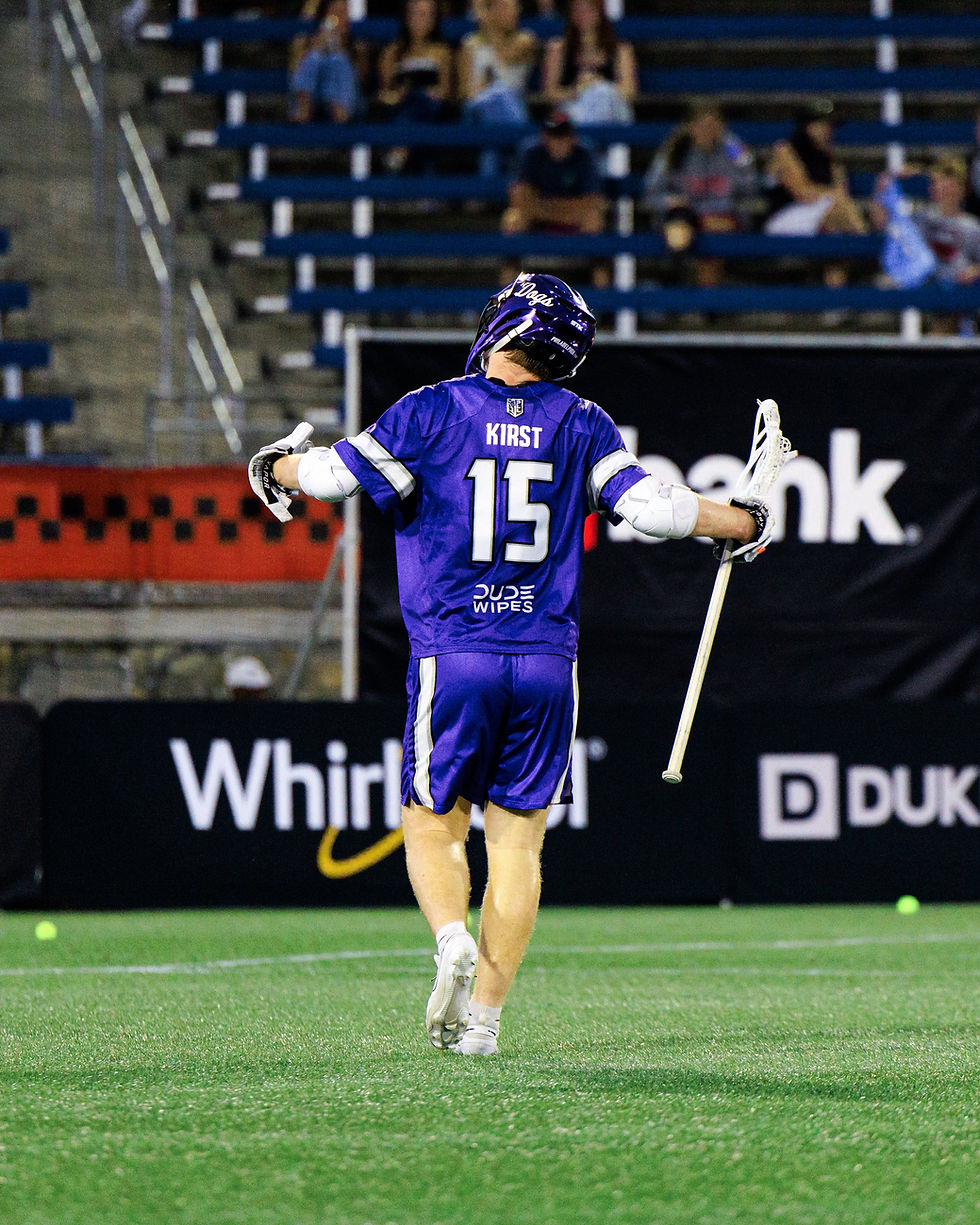
The old saying goes that records were meant to be broken. And it seems like every week we’re told about another record being broken. That’s a good thing. The next generation surpassing marks set by prior legends is a good and natural event that happens in sports. But we need to just decide what context we’re using. When Rob Pannell set the points record, it was called the pro lacrosse record. The meaning there is that it combines the MLL and PLL eras of the field game. It doesn’t count NLL stats, which is very much pro lacrosse, and many fans bemoan the effort to seemingly ignore those numbers (Pannell is over a thousand points shy of John Tavares career point mark). That’s a whole other topic. This past weekend we heard about CJ Kirst approaching the single season goals record, but that’s in PLL history. So that’s just since 2019. I know it’s exciting to see records be broken and new marks be set. But we also need to think about the new fan. In the course of a given week, that fan might here about record being set in pro lacrosse, but not actually ALL of pro lacrosse because the NLL exists, and then we hear of record being set in PLL history, because that league launched in 2019 and it’s different scoring wise from the MLL which played starting in 2001 through 2020 so it's different from pro lacrosse history. I imagine just reading that sentence is exhausting. Imagine trying to have it explained if you’re just finding your way to the game for the first time. The NFL has pre merger notes for records, MLB has the dead ball era, NBA has the shot clock era, lacrosse needs to find a way to denote what these records mean in a way that fans can easily understand.
The New York Atlas are on the clock
Following their loss to the Redwoods, the Bulls are now 3-7. They are two games back in the win column of every other team in the PLL, with remaining games against the Outlaws and Waterdogs. They need to go 2-0 in those games to keep their extremely slim playoff hopes alive (math still maths, they aren’t quite dead yet). On top of that, they now have a score differential of -29. The next worst differential in the league belongs to the Chaos at -19. But with everyone else in the PLL at 5+ wins, an Atlas loss not only eliminates them from the playoffs, it locks up the number one pick in the draft for them. The 2027 PLL Draft, as of today, might just be a straight up mess. The NCAA’s new 5 in 5 rule means that the class we thought might be in the draft actually won’t be available until the 2028 draft (unless players decide to declare early). Weapons like Shawn Lyght and Owen Duffy are another year away. On top of that, legal action taken following the passing of that rule has members of the 2022 high school class (meaning this year’s PLL rookies) might get another of eligibility. Members of the 2022 class, including some PLL rookies, have expressed interest in using that eligibility if available. How that plays out will affect just what you can expect the Atlas to do with that top pick if they get it.


Comments