
Global Lacrosse Games rosters, inspired by the 2016 World Cup of Hockey

s the Los Angeles Olympic games draw closer, the lacrosse world has ramped up efforts to put the Sixes format at center stage. The Premier Lacrosse League has held an annual event called the Championship Series since 2023. In past years, it’s been a week-long event featuring the top four teams from the prior regular season competing in a Sixes format. It closely resembles the Olympic ruleset, with a few modifications like a two point line and higher levels of acceptable contact.
This year, the PLL has pivoted from the Championship Series to the Global Lacrosse Games. They’ve partnered with the National Lacrosse League to include both field and box pros in the event. The NLL will pause their season to allow athletes to compete. Rather than representing pro teams, players will represent their home nation. Four nations are competing in both men’s and women’s events: the USA, Canada, Haudenosaunee, and Australia.
It should be a spectacular event and a fun precursor to the Olympics in LA in 2028. A PLL pro raised an interesting idea to me though. This pro recalled the 2016 World Cup of Hockey, an event held in Canada that featured the eight top nations in the world. Most interesting though, was the way rosters were split for the US and Canada. Three teams were made from the two nations. There was Team USA, Team Canada, and Team North America. Team USA had American players aged 24 and over, Team Canada had Canadian players aged 24 older, and Team North America had players from the US and Canada who were aged 23 and younger. It served as a way to showcase some of the brightest young talent in the world, introducing fans to the future of the sport.
What if the Global Lacrosse Games set up their rosters this way? There is no shortage of remarkable lacrosse talent in North America. It would be fun to talk about if nothing else, so I got to roster building. I took the same approach as the World Cup of Hockey, creating a Team USA, Team Canada, and Team North America. As for rules, to start I’m building a Sixes roster, which is made of 10 runners and two goalies. I used Team Canada’s roster for the PALA Sixes Championship and the Team USA training camp roster which will send players to both the PALA Sixes Championship and the Atlas Cup in late October. I set the age cutoff at 25 and over for Team USA and Team Canada, 24 and under for Team North America. It doesn’t make the selection process any easier, there is a load of talent out there. I didn’t consider health or availability for this, strictly names on paper.
Team USA (25 and over Americans)
Matt Campbell
Ryan Conrad
Xander Dickson
Pat Kavanagh
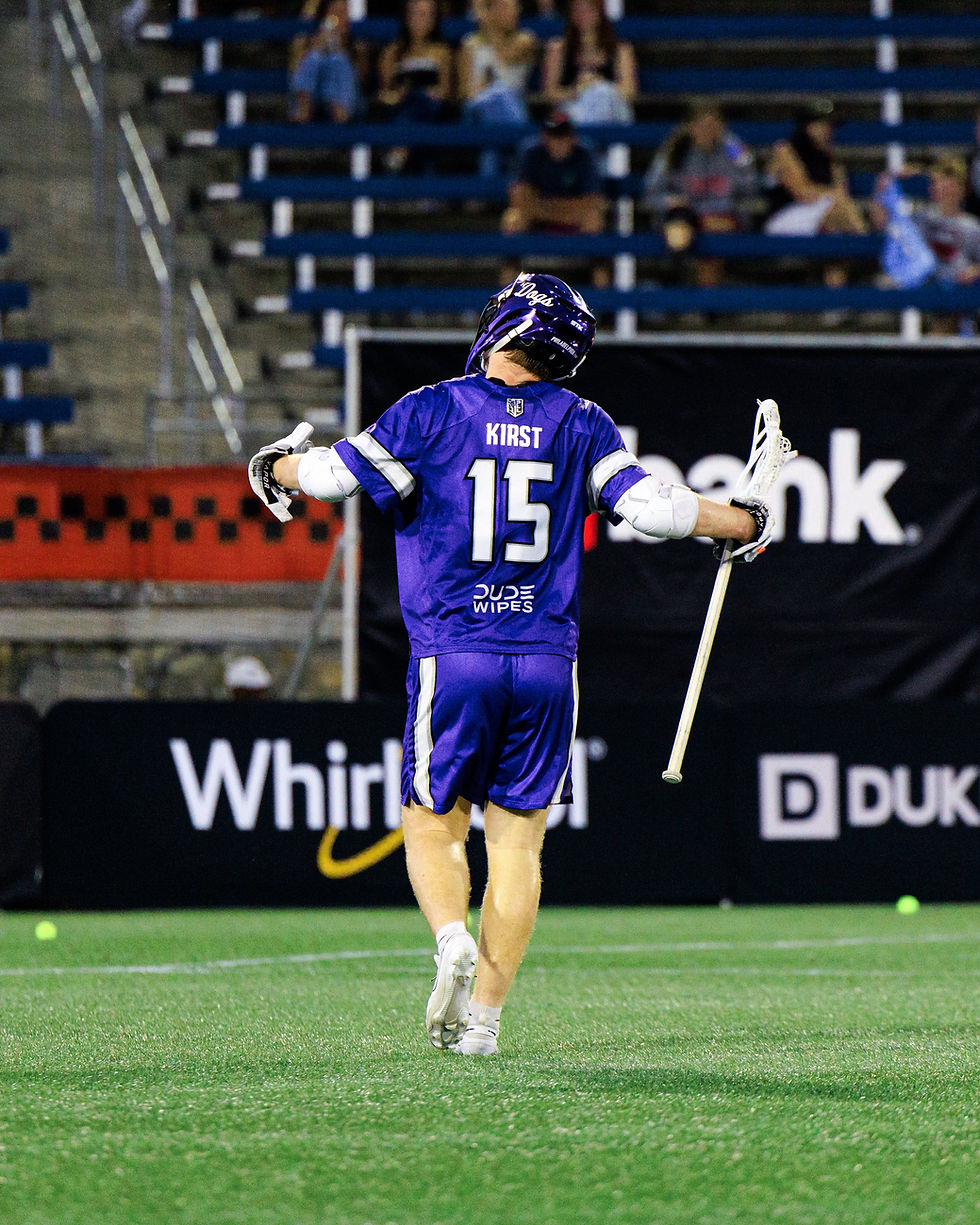
Connor Kirst
Danny Logan
Mac O’Keefe
Connor Shellenberger
Michael Sowers
Ryan Terefenko
Liam Entenmann
Logan McNaney
This roster is made almost entirely of the USA training camp roster. In fact, I had to add a player since once I split it by age, this group only had nine runners. The easy inclusion to me was Ryan Terefenko, an elite defender and transition player who, paired with Danny Logan, gives this team the ability to defend the world’s top dodgers even with no poles in the format. After that, this roster is actually very well built. It’s a good balance of elite dodge to feed threats (Sowers, Shellenberger, Kavanagh), dodge to score threats (Campbell, Conrad, Kavanagh, Shelly and Sowers again), and elite shooters to play off ball (Dickson, Campbell, O’Keefe). There’s a good balance of righty and lefty to it as well. The midfielders like Conrad, Terefenko, Logan, and Kirst are all effective on both ends. Three of that group have valuable indoor experience.
Toughest exclusions here for me were Jack Hannah and Bryan Costabile, both of whom should excel in the format. Hannah has evolved into an elite midfield threat indoors and outdoors, scoring creatively or from range with pure shooting power. Sixes is a great format for him.
Team Canada (25 and over Canadians)
L, Josh Byrne
L, Zach Currier
R, Dhane Smith
L, Jeff Teat
R, Tre Leclaire
L, Owen Hiltz
R, Sam English
R, Latrell Harris
L, Ian MacKay
R, Casey Wilson
G - Brett Dobson
G - Dillon Ward
Canada has always skewed a bit younger for qualifying events and things that aren’t World Championships, so more of their PALA roster was put on Team North America. The two goalies are still on Team Canada, and this roster is rock solid in net. Brett Dobson is arguably the world’s best, coming off an MVP season indoors and a Goalie of the Year season outdoors.
For runners, I had to add some names since Team Canada sent so many guys to Team North America. I did want to maintain a good balance of righties and lefties, and stayed with five each. This roster might skew a bit to the older side. I just can’t bring myself to put another lineup on the field. Byrne, Smith, Hiltz, Teat, and Leclaire are scoring machines in the format. Currier, English, Wilson, Harris, and MacKay can do everything. This is a team with no clear vulnerabilities, and can beat you in multiple ways. They’ll squeeze every advantage they can out of transition and the sub game, they’ll overpower you shooting from range if need be, they’re stacked with elite passers and dodgers. The thought of taking the field against this team is nightmare fuel. The noted change from the actual Team Canada roster to this one is swapping Tanner Cook for Owen Hiltz. Adam Poitras likely has a spot on this team in the future but I couldn’t find an obvious place to slot him yet.
Team North America (24 and under American and Canadians)
R, Chris Kavanagh - 23
L, CJ Kirst - 24
L, Aidan Maguire - 23
R, Andrew McAdorey - 24
R, Joey Spallina - 23
L, Matt Collison - 23
L, Brennan O’Neill - 24
L, Ty English - 24
R, Silas Richmond - 23
R, Finn Thomson - 23
G - Sean Byrne
G - Grayson Manning
This was fun, and very hard, to build. Goalie is an interesting spot, since all the current USA and Canada training camp goalies are 25 and over. But it didn’t take long to land on two elite netminders, one from the US and Canada. Sean Byrne is fresh off a PLL title with the Waterdogs and a remarkable rookie season. He was over 70% in net in the title game and had he started more games this year would likely have been a Rookie of the Year and Goalie of the Year finalist. Greyson Manning, currently at Denver, has already been a star on the global stage. He delivered a tour de force performance for Canada to secure gold at the U20 World Championships. He’s arguably the best goalie in the current college game, and a future two league pro.
There are a few instant inclusions to me. From jump, CJ Kirst, Silas Richmond, Matt Collison, and Brennan O’Neill are must include players. This should be a score at will type event for them, given their physical gifts and the lack of long sticks on defense.
After that it gets real tough to pick this roster. I decided against including current college athletes as runners; there are just too many 24 and under capable pros. So that removed Dom Pietramala and Willem Firth from the US and Canada respectively. There’s a lot of lefties out there and we had to balance things up a bit. I also needed to key on players who can impact both ends, ideally with some indoor experience. A two way midfield group of English and Maguire should deliver plenty of coverage on the defensive end that is dangerous in the open field. I highly value shots on goal percentage in Sixes since anything that misses the net is a turnover. So the names that got cut from the Team USA camp pool are Mikey Weisshaar, Matt Traynor, Aidan Carroll, Kyle Lewis, and Coulter Mackesy. Lewis is one of the best athletes in the pool, Mackesy an elite shooter. They were my last two cuts. For Lewis, I am sticking with just the two way duo of Maguire and English, while relying on indoor weapons like Collison to impact both ends if need be. For Mackesy, he’s a truly spectacular lefty shooter, but the lefty spot is just so stacked there’s no room. I couldn’t reduce touches for Kirst, O’Neill, and Collison for him. Spallina, Kirst, O’Neill, and the Canadian core of this group also bring valuable box experience to the team, which matters in Sixes. Even if you don’t plan on using a lot of box influence in your own gameplan, you need to be prepared for it when you play Canada or you’ll get demolished.
There’s a zillion brutal exclusions here. Aside from the names above, Josh Yago would be outstanding in this. But the other toughest exclusions for me were Chad Palumbo and Ryan Stines. I just don’t think it’s remotely obvious who comes out to make room for them. It’s a really tight roster to pick just ten runners. Come the actual Olympics in 2028, I won’t be surprised if one or both of them is on the roster.

Comments