
From 76 players down to one. Using 20 years of trends to pick the 2026 Tewaaraton Award Winner.

It’s been, as expected, a wide open year in men’s college lacrosse. The preseason number one team in the media poll missed the NCAA tournament. Teams were up and down the polls all year, new number ones being crowned all the time. Duke, who some thought shouldn’t even have made the NCAA tournament, made a run to the Final Four.
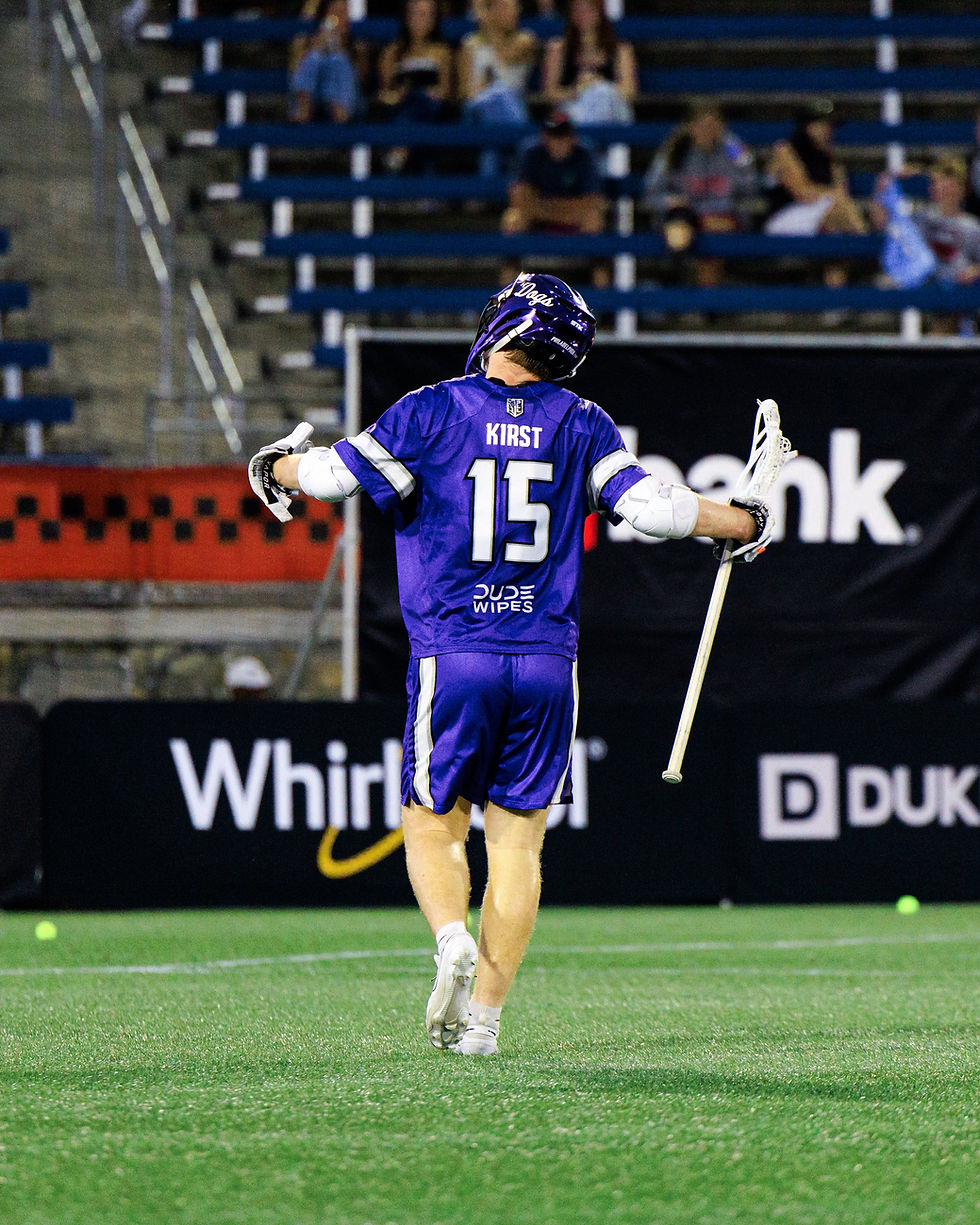
An extension of the wide open landscape for teams, the race for the highest honor in the sport is wide open as well. The Tewaaraton Award, lacrosse’s version of the Heisman, is given annually to the top player in college lacrosse. In most seasons, a clear front runner tends to emerge by tournament time. Last year CJ Kirst had already begun running away with it by the time the tournament started, there were little doubts about Pat Spencer by now in 2019, or Dylan Molloy in 2016. But in 2026, it’s been tough to say who the favorite is, even with the season concluded.
Let’s turn to history for some help. I reviewed the last 20 years of Tewaaraton winners, dating back to Matt Ward in 2006. I charted info about each winner that includes their grad year, position played, conference they are from, record overall and in conference play when their season ended, whether or not they won their conference, how far they went in the NCAA tournament, and their ranks in points per game, goals per game, and assists per game, among a few other data points. With this info, I turned to the 2026 candidates for the award. The Tewaaraton Watch List, at its largest point, had 76 players on it following the initial release plus two waves of additions. Using that group of 76 as my total candidate pool, I applied the data from the past 20 years and ran the group through the (patent pending) Sticks In Tewaaraton Eliminator. Doing that slowly took the field from 76 down to a winner. The five actual finalists are Joey Spallina, Shawn Lyght, Owen Duffy, Willem Firth, and Nate Kabiri, and the winner will be named on May 28th. Here are the step by step results:
To start with, you gotta be healthy enough to play
Players Eliminated: Bobby Van Buren, Will Schaller
Players Remaining: 74
Winners have been key factors from start to finish of the season for their teams, and those teams tend to go the distance. BVB unfortunately didn’t get to play a game this season, injuring his knee before Ohio State’s first game. He’s attempting to get a waiver for another with the Buckeyes. Will Schaller hurt his knee in an overtime win over UVA. It’s now been reported that Schaller will not play another year at Maryland, and will play pro lacrosse in 2027. It’s awful news for the sport in general, as Schaller was arguably the nation’s top defender, a Schmeisser candidate, and ended up as a third round pick in the PLL draft despite originally projecting as a top five pick. Given the amount of time missed, these two don’t reach the threshold to be a winner.
You gotta go D1
Players Eliminated: Kyle Lewis, Jack Regnery, Kevin Miller
Players Remaining: 71
The Tewaaraton Winner has never come from a D2 or a D3 school. All three of these players are phenomenal talents. Lewis could be (and almost was) a top line midfield threat for the biggest D1 programs in the nation. Regnery scored 224 points in just his sophomore and junior seasons. He’s a prolific scorer on par with the best of the best, but playing at Tufts makes his odds long. Only two players have been named the Virginia SID men’s lacrosse player of the year as sophomores: Connor Shellenberger and Kevin Miller. The Christopher Newport attackman is one of the best all around weapons in D3. All three have legit chances to crack pro rosters (Lewis and Regnery were both taken in the PLL draft this year, Miller is still just a junior). Tufts won the title, Adelphi lost their bid for a three peat in OT in the title game. These players would have to buck history to win the Tewaaraton.
You gotta be old
Players Eliminated: Hunter Aquino, Tim Shannehan, Peter Thomann, Greyson Manning, Peter Buonnano, Matt Jeffery
Players Remaining: 65
Of the past 20 winners, the Tewaaraton has only been won by juniors and seniors. No sophomore has ever taken home the hardware. Six of the 20 winners were juniors (one of them was junior Lyle Thompson sharing it with senior Miles Thompson), so it tends to be a senior heavy award. All these players should have their names in the conversation in future years but for now, the kids will have to wait. Thomann is technically a redshirt sophomore, but if this requirement didn’t eliminate him another one would. At this point I will also mention that UVA’s Brendan Millon should absolutely have been among the 76 players on the Watch List at its largest, though being a freshman, this criteria would have eliminated him. The five actual finalists are four juniors and a senior, so they all are still in the running from this point.
Tewaaraton banned the faceoff specialists
Players Eliminated: Brady Wambach, Henry Dodge, Jack Cascadden, John Mullen
Players Remaining: 61
No faceoff specialist has ever won the award. The closest we’ve seen is Trevor Baptiste, who was a finalist twice (2017 and 2018). The award those years went to Ben Reeves and Matt Rambo respectively. In both seasons, Baptiste won a ridiculous 74% of his faceoffs. He had 178 ground balls in 2017 and 163 in 2019, and had double digit points in both years. If Baptiste hadn’t done enough to do it, even just as a career award as clearly the top faceoff specialist ever, it’s hard to imagine a faceoff man taking home the award any time soon.
Sorry, no other specialists either
Players Eliminated: Aidan Maguire, Anderson Moore, Caleb Fyock, Cardin Stoller, Eric Kolar, Jack Pilling, Ryan Croddick, Ryan Della Rocco, Sean Byrne, Connor Knight, Jimmy McCool
Players Remaining: 50
Defensive midfield specialists and goalies have never won the award. Maguire has been so good in his Duke career that he probably had the best chance to buck the trend. He’s already been a McLaughlin Award winner as the nation’s top midfielder, an award that rarely goes to SSDM’s. In 2026 he won the Enners award as the nation’s top player, the first SSDM to ever accomplish that. The last to win the McLaughlin, and really the only other true SSDM specialist to do it, was Zach Goodrich. Goodrich, however, was not a Tewaaraton finalist, so history is not on Maguire’s side. While the award has gone to a goalie in the women’s game (Megan Taylor in 2019), it never has in the men’s game. Liam Entenmann was up for it in 2024, the third goalie ever to be named a finalist. Entenmann was Goalie of the Year that year. It was a remarkably dominant season capped off by a preposterous 76%, 16 save effort in the title game. Like Baptiste with the faceoff, it’s fair to wonder if Entenmann didn’t do enough to win it, who actually could?
It’s a (mostly) Attackman award. Sorry poles.
Players Eliminated: AJ Marsh, Alex Ross, Billy Dwan III, Brendan Staub, Charlie Johnson, Cullen Brown, Hunter Smith, Jack Combs, Jake Melchionni, John Schroter, Julian Radossich, Max Neeson, Richard Checo, Riley Figueras, Shawn Lyght, Ty Banks, Will Donovan, Jack Stahl, Nikko DiPonio
Players Remaining: 31
Actual Finalists Remaining: 4
In the last 20 years, the Tewaaraton has gone to an attackman 18 times. The lone exception is Max Seibald in 2009 (there was no award in 2020 due to COVID-19, but if there were it was almost certainly going to Michael Sowers). In the award’s history the only other midfielders to win it are Kyle Harrison (2005), Chris Rotelli (2003), and Doug Shanahan (first ever recipient in 2001). There have been compelling cases for a defender to win the award. Notre Dame’s Matt Landis in 2016 dominated matchups with each of the other finalists during the season; an interesting way to make a strong argument. Shawn Lyght is a finalist, the first since that Landis season. This criteria eliminates our first actual finalist in Lyght. Joel White was a finalist in 2011 and 2010, and won the McLaughlin award as an LSM in 2010. It’s always been the bridesmaid, never the bride for poles when it comes to the Tewaaraton.
The winner comes from the Lacrosse Power Five(ish)
Players Eliminated: Aidan O’Neill, Cody Malawsky, Joe Sheridan, Mikey Weisshaar, Patrick Radomski, Rory Connor, Ryan Stines
Players Remaining: 24
Actual Finalists Remaining: 4
In the last 20 years, the Tewaaraton has been won by a player from the ACC, America East, Big Ten, Ivy League, or Patriot League. No other conference has produced a winner. This is based on present day conference affiliation. The America East winners were the Thompsons, Lyle in 2015 and Lyle sharing it with Miles in 2014. The Patriot League has produced two winners, Pat Spencer (Loyola) and Peter Baum (Colgate) in 2019 and 2012 respectively. That’s three separate players in four out of 20 years winning the Tewaaraton outside of the ACC, Ivy, and Big Ten. There were some strong candidates to buck the trend this year, given Mikey Weisshaar’s prodigious individual talent and Silas Richmond’s general dominance and rise to the top of the lacrosse world. But history is not on their side.
OK, check in time. The Eliminator has taken us down to 24 players left on the watch list. All of them are juniors or seniors (including grad students). Seven are midfielders, though a handful flex between spots (for example Benn Johnston, Michael Leo, Matt Collison, and Max Sloat all played attack too). Nine of them are in the ACC, six are in the Big Ten, and six are in the Ivy. The other three players are Albany’s Silas Richmond, Army’s Evan Plunkett, and Colgate’s Hunter Drouin. Let’s keep cutting things down.
You gotta make a postseason run
Players Eliminated: Alex Marinier, Colin Kurdyla, Eric Spanos, Evan Plunkett, Garrett Haas, Hunter Drouin, Jack Speidell, Logan Ip, McCabe Millon, Ryan Goldstein, Silas Richmond, Truitt Sunderland, Willem Firth
Players Remaining: 11
Actual Finalists Remaining: 3
This one chops down the list significantly. Because the award isn’t given out until after the tournament concludes, postseason play tends to weigh heavy in the selection process. The earliest exit from the NCAA tournament by a winner in the last 20 years is the quarterfinals. Quarterfinal exit winners were Pat Spencer, the Thompsons, and Peter Baum. All had talent and production so prodigious it’s flatly undeniable they would win. The postseason run also ideally makes it to Memorial Day, as 13 of the last 20 winners either played in or won the national championship game. This criteria eliminates our second actual finalist, Willem Firth. Cornell suffered a first round loss in overtime to Johns Hopkins.
Here’s our final 11 players:
Benn Johnston, Duke
Chad Palumbo, Princeton
Dom Pietramala, North Carolina
Hunter Chauvette, Johns Hopkins
Joey Spallina, Syracuse (Finalist)
Josh Yago, Notre Dame
Matt Collison, Johns Hopkins
Max Sloat, Duke
Michael Leo, Syracuse
Nate Kabiri, Princeton (Finalist)
Owen Duffy, North Carolina (Finalist)
You gotta pile up the points
Players Eliminated: Benn Johnston, Chad Palumbo, Dom Pietramala, Hunter Chauvette, Josh Yago, Matt Collison, Max Sloat, Michael Leo, Owen Duffy (finalist)
Players Remaining: 2 (Joey Spallina and Nate Kabiri, both actual finalists)
Of the last 20 winners, only two weren’t top five in the nation in at least one category among points per game, goals per game, or assists per game. Pat Kavanagh was 8th in assists per game in 2024 but outside the top 10 in other stats, same with Matt Rambo in 2017. Max Seibald is the point production anomaly. He was 100th in the nation in points per game in his 2009 Tewaaraton season, 69th in goals per game. That’s the pre shot clock era, and Seibald was a middie who would basically log 60 ridiculous minutes every game, smashing the defending midfield to smithereens as he went. In the majority of those 20 winners, the player was #1 or #2 in the country in at least one category. 2026 is interesting because no one in our top 11 is in that ballpark. In fact, the production criteria eliminates almost everyone. Max Sloat, Benn Johnston, Hunter Chauvette, and Dom Pietramala finished outside the Top 200 in assists per game. Matt Collison was 100th in assists per game and outside the top 100 in both other stats. Michael Leo was 70th in assists per game, didn’t crack top 80 in the other two categories. Josh Yago, who was excellent for Notre Dame all year, finished outside the Top 40 in all three categories. Owen Duffy picked up injuries late that definitely slowed him down, and he finished outside the top 10 in all three stats; he came closest in assists per game where he ranked 11th. Sometimes this is a function of playing in a loaded offense and the ball being shared. But for the two remaining, Joey Spallina and Nate Kabiri, they produced big stats anyway. Spallina was 4th in assists per game and 10th in points per game, Kabiri 9th assists per game and tied with Spallina at 10th in points per game
You need to top the other lists and bring home other hardware
Player Eliminated: Joey Spallina, Nate Kabiri
Player remaining: Joey Spallina, Nate Kabiri?
Every single one of the last 20 winners has been a USILA First Team All American. Spallina is first team, Kabiri is second team. On top of that, Tewaaraton winners tend to take home other hardware. 16 of the last 20 winners took home either the Enners Award (most outstanding player), the Turnbull Award (most outstanding attackman, plus Seibald won the McLaughlin for outstanding midfielder), or both. The most recent exception is Pat Kavanagh, the next most recent is Steele Stanwick in 2011. Notable about both Kavanagh and Stanwick (and the other two, Ned Crotty and Mike Leveille), all four won the NCAA title in their Tewaaraton year. Which, if you’re a Kabiri fan, offers some hope.
Spallina won the Turnbull this year as the nation’s top attackman. While bringing home additional hardware usually indicates a Tewaaraton winner, it’s not necessarily this award that does it. Players to win both the Turnbull and Tewaaraton in the last 20 years are Dylan Molloy, Lyle Thompson, and Matt Danowski. That’s it. In contrast, 11 of the last 20 Tewaaraton winners took home the Enners award, but NOT the Turnbull. Spallina also had a final four exit. Only two of the last 20 winners won after exiting on Saturday at championship weekend: Dylan Molloy and Rob Pannell.
The final data point, in general, points to Spallina. Though the intricacies within the data suggest that Kabiri wouldn’t be a crazy choice. The good comparison for both players is Pat Kavanagh’s 2024.
Kavanagh: 11th in PPG, 127th in GPG, 8th in APG, won his conference, won the title, 1st team USILA AA, no Enners or Turnbull
Kabiri: 10th in PPG, 88th in GPG, 9th in APG, won his conference, won the title, 2nd team USILA AA, no Enners or Turnbull
Spallina: 10th in PPG, 117th in GPG, 4th in APG, did not win his conference, did not win the title, 1st team USILA AA, won the Turnbull
We really are splitting the hairs at the end. Trends will be bucked, as we should expect to tie a bow on what was a wild 2026. Kabiri would be the first ever 2nd team AA to win the award. Spallina would be the first in the last 20 years to win neither of his conference nor the title and still win the award.
I expect the real hardware differentiator is the one they give out on Memorial Day. The Tewaaraton tends to go to champions, and Kabiri just won one. But I wouldn’t be surprised to see Joey Spallina win as a senior, and the award tends to go to seniors as 14 of the last 20 winners won it in their last year. His remarkable and historically productive Syracuse career ending with a Tewaaraton wouldn’t be a shock either.
If you want to view the data from the past 20 winners, I'll happily share my crude and ugly spreadsheet with you. Enjoy.

Comments